The Global Imperative: Feeding a Growing World Sustainably
The world’s population continues its relentless climb, placing unprecedented pressure on global food systems. Among the most consumed meats globally, pork production stands at a critical juncture. Farmers are tasked with meeting soaring demand while simultaneously navigating a complex web of challenges: rising operational costs, stringent environmental regulations, and the ever-present threat of devastating animal diseases. The traditional methods of livestock management, reliant on manual observation and reactive decision-making, are simply no longer sufficient to guarantee efficiency, profitability, or sustainability in the 21st century.
The sheer scale of modern pig farming operations makes human oversight an increasingly impossible task. A single farm can house thousands of animals, each requiring constant monitoring for subtle changes in behavior, feeding patterns, and health indicators. Missed cues can lead to rapid disease spread, significant economic losses, and compromised animal welfare. This is not merely a matter of maximizing yield; it is a fundamental challenge of resource optimization, ethical stewardship, and global food security.
The Cracks in the Traditional System
Traditional pig farming is plagued by several systemic inefficiencies that erode profitability and sustainability. These issues are not isolated incidents but structural weaknesses that demand a technological overhaul.
1. Inefficient Resource Management
Feed costs typically account for 60-70% of a pig farm’s total operating expenses. Yet, traditional feeding systems often rely on generalized schedules rather than individual animal needs. This leads to overfeeding, which is wasteful and costly, or underfeeding, which stunts growth and delays market readiness. Furthermore, manual monitoring of environmental factors—such as temperature, humidity, and ventilation—is often imprecise, leading to suboptimal growth conditions and increased energy consumption.
2. The Constant Threat of Disease
Disease is the single greatest risk to pig farming. Outbreaks of illnesses like African Swine Fever (ASF) or Porcine Reproductive and Respiratory Syndrome (PRRS) can wipe out entire herds, causing billions in losses and disrupting supply chains. Early detection is paramount, but relying on human observation to spot the initial, often subtle, signs of sickness—such as lethargy, reduced appetite, or changes in posture—is inherently fallible, especially across vast facilities. By the time a human identifies a problem, the infection may have already spread.
3. Labor Shortages and Skill Gaps
The agricultural sector worldwide faces a growing crisis of labor. Modern farming requires specialized skills, yet the work is often physically demanding and repetitive, leading to high turnover. Farms struggle to find and retain skilled personnel capable of the meticulous, round-the-clock monitoring required for optimal herd health and performance. This reliance on a dwindling and often overburdened workforce further exacerbates the challenges of inconsistent management and delayed response times.
4. Environmental and Ethical Pressures
Modern consumers and regulators demand higher standards for animal welfare and environmental impact. Farmers are under pressure to reduce their carbon footprint, manage manure effectively, and ensure pigs are raised in humane conditions. Traditional systems lack the granular data needed to prove compliance or to implement precise, welfare-enhancing interventions. The lack of objective, continuous monitoring makes it difficult to proactively address stress or discomfort in the animals.
The Dawn of Smart Livestock: An AI Imperative
The confluence of these challenges has created an urgent need for a paradigm shift. The solution lies not in working harder, but in working smarter—by leveraging the power of Artificial Intelligence and the Internet of Things (IoT). AI offers the ability to transform raw data into actionable intelligence, moving farming from a reactive, generalized practice to a proactive, precision-based science.
By integrating advanced sensors, computer vision, and machine learning algorithms, AI can provide the continuous, objective, and individualized oversight that human labor cannot. This technological leap promises to unlock unprecedented levels of efficiency, dramatically improve animal welfare, and secure the future of sustainable pork production. This is the revolution that Trackfarm is leading.
The Promise of Precision Pig Production
The move to precision livestock farming is not a luxury; it is an economic necessity. By applying data-driven insights, farmers can achieve a level of control and optimization previously unimaginable. Every aspect of the pig’s life—from the moment of birth to market readiness—can be managed with scientific precision, leading to healthier animals, lower costs, and a higher-quality product. The next section will delve into how Trackfarm is delivering on this promise, turning the challenges of modern farming into opportunities for growth and sustainability.
Trackfarm: The AI-Powered Brain of the Modern Pig Farm
Trackfarm is not just a collection of sensors; it is a holistic, intelligent ecosystem designed to optimize every facet of pig production. It represents a fundamental shift from generalized herd management to precision livestock farming, where every animal is treated as an individual with unique needs. The system is built on three core technological pillars: advanced IoT sensing, high-resolution computer vision, and a proprietary machine learning platform.
Pillar 1: Unblinking Eyes – Computer Vision and Behavioral Analysis
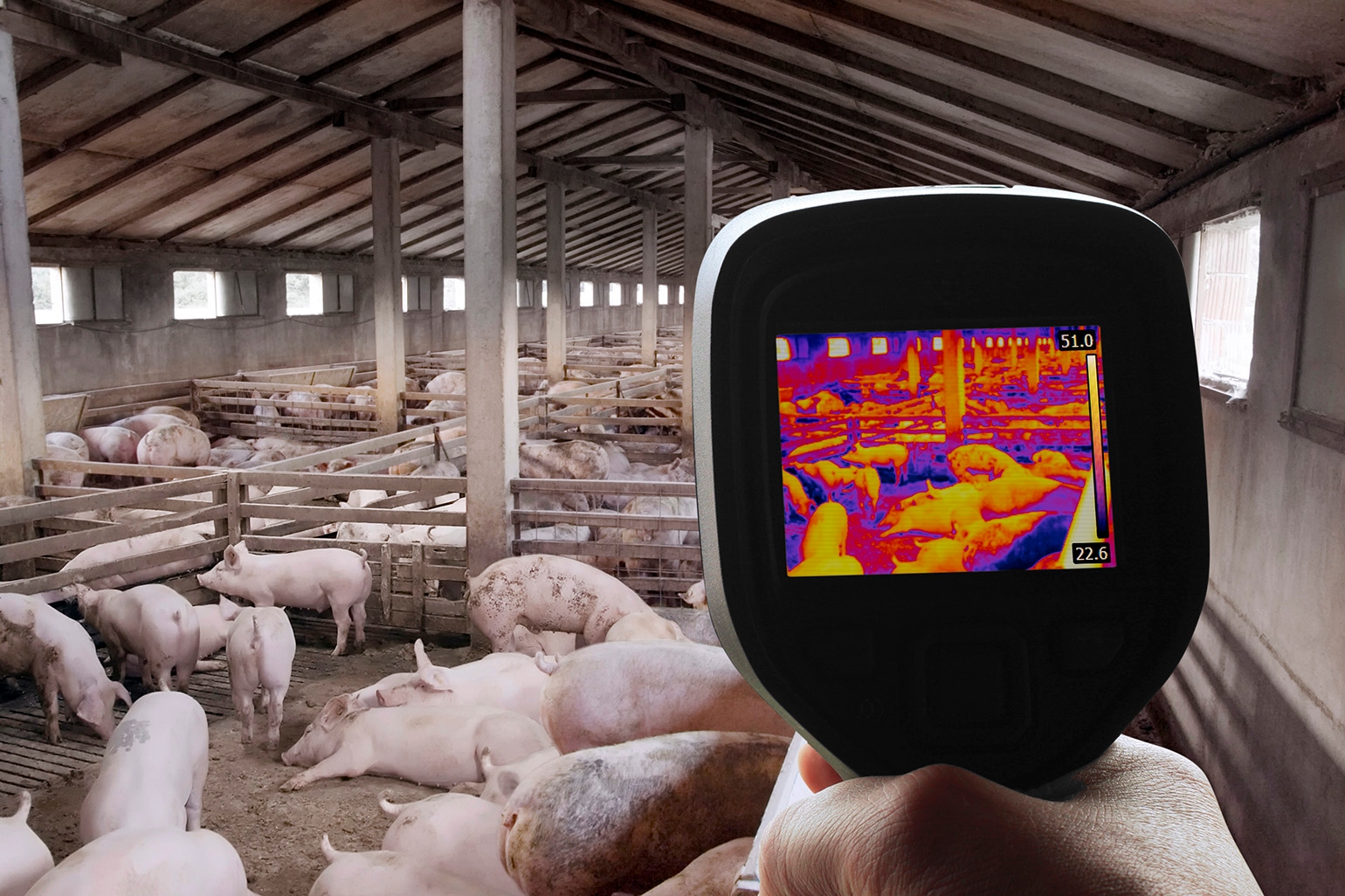
The most revolutionary aspect of Trackfarm is its use of non-invasive computer vision. High-definition cameras, strategically placed throughout the barns, continuously monitor the pigs. The AI model processes this video feed in real-time, analyzing subtle behavioral cues that are invisible to the human eye.
- Early Disease Detection: The system tracks changes in posture, gait, and activity levels. A slight decrease in movement or a change in the way a pig walks can be an early indicator of lameness or illness, often days before clinical symptoms manifest. This allows for immediate, targeted intervention, preventing widespread outbreaks.
- Feeding Efficiency: Trackfarm monitors individual feeding behavior, recording the time spent at the feeder and the rate of consumption. This data is used to adjust feed composition and quantity on a per-pen or even per-pig basis, ensuring optimal growth rates and minimizing feed waste.
- Social Dynamics and Welfare: The AI identifies aggressive interactions, overcrowding, and signs of stress. By understanding the social dynamics of the herd, farmers can adjust stocking densities or pen layouts to improve animal welfare, leading to healthier, happier, and more productive pigs.
Pillar 2: Data Synthesis – The Machine Learning Platform
The vast streams of data collected from the cameras and IoT sensors are funneled into Trackfarm’s proprietary machine learning platform. This is the ‘brain’ that translates raw data into actionable insights. The platform uses predictive analytics to forecast potential issues before they become critical.
For instance, by correlating environmental data (temperature, ammonia levels) with behavioral data (respiratory rate, clustering), the system can predict the likelihood of a respiratory issue in a specific pen. It doesn’t just report a problem; it provides a prescriptive recommendation—e.g., “Increase ventilation in Pen 4 by 15% and check the water supply for Pig ID 789.”
Pillar 3: Environmental and Resource Optimization
Beyond the animals themselves, Trackfarm meticulously manages the farm environment. IoT sensors measure everything from air quality and temperature to water consumption and manure levels. This data is used to automate climate control systems, ensuring the pigs are always in their thermal comfort zone, which is crucial for feed conversion efficiency.
The system also provides detailed reports on resource usage, allowing farmers to pinpoint areas of waste and inefficiency, directly impacting the bottom line.
A Comparative Look: Traditional vs. Trackfarm
The difference between the old way and the new is stark. Trackfarm moves the farm from a high-risk, low-visibility operation to a transparent, data-driven enterprise.
| Feature | Traditional Pig Farming | Trackfarm AI Solution |
|---|---|---|
| Disease Detection | Manual observation; often reactive and late. | Real-time, predictive AI analysis; proactive intervention. |
| Feed Management | Generalized schedules; high waste and cost. | Individualized, data-driven feeding; optimized growth and low waste. |
| Labor Requirement | High, repetitive, and skilled labor needed for monitoring. | Reduced manual labor; focus shifts to strategic management and intervention. |
| Environmental Control | Manual or simple thermostat control; inconsistent. | Automated, fine-tuned climate control based on real-time data. |
| Data Visibility | Low; reliance on paper records and memory. | High; comprehensive digital dashboard with historical and predictive analytics. |
| Animal Welfare | Subjective and difficult to quantify. | Objective, continuous monitoring of stress and behavior. |
The Economic Case for AI in Swine Production
The investment in a system like Trackfarm is rapidly offset by significant economic returns. The key areas of financial impact include:
- Reduced Mortality and Veterinary Costs: Early disease detection drastically lowers the need for broad-spectrum antibiotics and reduces animal loss.
- Optimized Feed Conversion Ratio (FCR): Precision feeding ensures that every kilogram of feed is maximally converted into weight gain, which is the single largest driver of profitability.
- Faster Time to Market: Healthier pigs with optimized growth curves reach market weight sooner, increasing the farm’s throughput and revenue cycles.
- Lower Labor Costs: Automation of monitoring and environmental control frees up skilled labor to focus on high-value tasks.
The next section will explore real-world case studies and the broader implications of this technology for the future of global food production.
Beyond Profit: The Triple Bottom Line of Smart Farming
The benefits of Trackfarm extend far beyond the farm’s immediate balance sheet. The integration of AI into pig production is a powerful catalyst for achieving the “triple bottom line” of sustainability: people, planet, and profit.
Enhancing Animal Welfare: A New Standard of Care
One of the most profound impacts of AI in farming is the dramatic improvement in animal welfare. Trackfarm’s continuous, objective monitoring replaces subjective, intermittent human checks.
- Individualized Attention: The system acts as a digital shepherd, ensuring that no animal suffers in silence. Pigs that are sick, injured, or stressed are immediately flagged, allowing farmers to provide precise, timely care. This is a significant ethical advancement over traditional herd management, where individual suffering can often go unnoticed until it is too late.
- Stress Reduction: By optimizing environmental conditions—maintaining perfect temperature, humidity, and air quality—the system minimizes environmental stressors. Furthermore, the AI can identify and alert farmers to behavioral patterns indicative of bullying or aggression, allowing for intervention to maintain a harmonious social environment. Healthier, less-stressed pigs require fewer antibiotics and produce higher-quality meat, creating a virtuous cycle of welfare and profitability.
Environmental Stewardship: Farming with a Lighter Footprint
The global food system is a major contributor to greenhouse gas emissions. Trackfarm provides the tools necessary for farmers to become true environmental stewards.
- Reducing Waste: Precision feeding not only saves money but also significantly reduces the amount of nitrogen and phosphorus excreted in manure, lessening the environmental impact on local waterways and soil.
- Optimizing Energy Use: The automated, data-driven control of ventilation, heating, and cooling systems ensures that energy is only used when and where it is absolutely necessary, leading to substantial reductions in the farm’s overall carbon footprint.
- Antibiotic Reduction: By enabling early, targeted treatment, the reliance on prophylactic or mass-medication is drastically reduced. This is a critical step in combating the global threat of antimicrobial resistance (AMR), positioning Trackfarm as a leader in responsible food production.
The Future is Now: Trackfarm and the Autonomous Farm
The current iteration of Trackfarm is already revolutionizing the industry, but the technology is merely laying the groundwork for the next generation of farming: the fully autonomous livestock operation.
In the near future, Trackfarm’s AI will move from providing prescriptive recommendations to executing autonomous actions. Imagine a system where:
- Automated Health Interventions: A sick pig is identified, isolated by a robotic gate, and administered a precise, localized treatment—all without human intervention, based on the AI’s diagnosis.
- Dynamic Feed Formulation: The AI constantly analyzes the pig’s growth rate, genetics, and current health status to dynamically adjust the feed mix in real-time, delivered by robotic feeders.
- Predictive Supply Chain: The system accurately forecasts the exact date and weight each pig will reach market readiness, automatically scheduling transportation and processing, thereby eliminating bottlenecks and maximizing efficiency across the entire supply chain.
This vision is not science fiction; it is the logical progression of the data-driven approach pioneered by Trackfarm. The role of the farmer is evolving from manual laborer to high-level system manager, overseeing a sophisticated, intelligent operation that runs with unparalleled efficiency and ethical rigor.
Conclusion: Securing the Next Generation of Food Production
The challenges facing global food production are immense, but so too is the power of human ingenuity, amplified by Artificial Intelligence. Trackfarm is more than a technology solution; it is a declaration that the future of farming will be smarter, more sustainable, and more humane.
By embracing AI, pig farmers can move beyond the limitations of the past, securing a profitable and responsible future. Trackfarm offers the precision, the foresight, and the control necessary to thrive in a world that demands more from its food producers. The revolution is here, and it is powered by data.
To learn how Trackfarm can transform your operation and secure your place in the future of farming, visit our website and schedule a personalized demonstration. The time to upgrade from traditional farming to intelligent livestock management is now.
Leave a Reply